
Access to Brilliant People Is a Strength, Not a Threat
Published: febrero 19, 2026
- Introduction: Rethinking What Leadership Really Requires
- Leadership Is Not About Having All the Answers
- Learning Requires Being Comfortable Not Knowing
- Customer Needs Should Shape the Team
- Where Innovation Actually Happens
- Why This Matters to Our Clients
- Access Is the Real Advantage
- Conclusion: Leadership Through Shared Intelligence

Great leadership is not about having all the answers. It is about recognising what you do not know and deliberately surrounding yourself with people who bring deeper expertise. At Agronomix, this belief shapes how we build teams, how we innovate, and how we support our clients. By focusing on collective intelligence, first-hand experience, and customer needs, we create better decisions, stronger partnerships, and long-term value for plant breeding programmes.
Introduction: Rethinking What Leadership Really Requires
I recently came across a simple line on LinkedIn: having access to people smarter than you is a blessing, not a threat.
It stood out because it captured something I have experienced repeatedly throughout my leadership journey.
Leadership is often framed as authority and certainty. Many still assume credibility comes from having answers or from being the smartest person in the room. However, my experience has shown that real progress, learning, and innovation come from recognising what you do not know and intentionally surrounding yourself with people who do.
This article explores that idea from three angles. First, through my own experience learning to staff to my weaknesses. Then, through how that belief shapes the way we build teams at Agronomix. Finally, it explains why this approach matters so much to our clients.
Because access to brilliant people is not a threat to leadership. It is one of its greatest strengths.
Leadership Is Not About Having All the Answers
Early in my leadership journey, I believed leaders needed answers. At the very least, I thought they needed to appear confident and informed at all times. That assumption did not last long.
Over time, I learned one of the most important leadership lessons I carry today: leaders should staff to their weaknesses, not their strengths. When blind spots remain unaddressed, they do not disappear. Instead, they quietly grow into risks.
Around 2010, Agronomix’s founder, Dieter Mulitze, questioned whether I was the right person to succeed him as leader of the company because I am not a plant breeder. It was a fair concern. His life’s work focused on crop science, and Agronomix exists to support breeders.
My response was simple. Leadership does not require mastery of every domain. Strong leadership requires recognising gaps and deliberately building around them. Dieter led Agronomix exceptionally well despite not specialising in finance or marketing, because he surrounded himself with people who did.
That conversation clarified something fundamental. Leadership is not about being the expert in everything. Instead, it is about knowing where expertise must come from others.

Learning Requires Being Comfortable Not Knowing
There is a quote often attributed to Jim Rohn: “If you are the smartest person in the room, you are in the wrong room.”
The message is not about competence. Rather, it highlights the importance of continual learning.
When leaders stop being challenged, learning slows. As a result, curiosity fades and decision-making suffers. Remaining teachable requires placing yourself in environments where others stretch your thinking and question your assumptions.
For me, leadership has never been about protecting expertise. It has always been about staying curious. When leaders stop learning from their teams, something has gone wrong. Either listening has diminished, or the environment no longer encourages challenge.
Customer Needs Should Shape the Team
Leadership philosophy alone does not create value. Purpose does.
From the beginning, I believed teams should be built around customer needs, not around the preferences or comfort of leadership. In plant breeding, those needs are complex. Breeders work with large datasets, biological uncertainty, regulatory requirements, and long timelines. Decisions made today can influence outcomes years into the future.
No single individual can fully understand all of that.
Therefore, instead of trying to master every discipline, we focus on building teams with deep and complementary expertise. Breeding knowledge, statistics, data management, software development, and support experience must exist in conversation with one another.
When teams work this way, better decisions follow. Importantly, this is also where innovation begins.
Where Innovation Actually Happens
Innovation rarely comes from individual brilliance. More often, it emerges from shared thinking and constructive challenge.
Innovation doesn’t come from having all the answers.
It comes from creating the conditions where better answers can emerge.
Different perspectives challenge assumptions. Open dialogue reframes problems. Over time, solutions improve. However, this type of environment does not appear by chance. Leaders must intentionally create it.
At Agronomix, innovation is not a department or a roadmap item. Instead, it is the by-product of how people work together every day, focused on solving real customer problems.
Why This Matters to Our Clients
For clients, this approach has practical consequences.
Plant breeding rarely presents neat problems. Data behaves unpredictably. Breeding programmes evolve over decades. Pressure to deliver results continues to increase. Under these conditions, software alone is not enough.
When clients work with Agronomix, they gain more than tools. They gain access to people who think deeply about breeding challenges every day. They work with teams that bring first-hand experience across crops, regions, and breeding approaches.
Rather than offering quick answers, we help clients ask better questions. As a result, decisions improve and confidence grows. Clients also benefit from collective thinking instead of relying on a single point of expertise.
This shared approach builds resilience. When challenges arise, solutions emerge through collaboration rather than dependency.

Access Is the Real Advantage
Technology matters. Software matters. However, in complex environments like plant breeding, access to experienced people and shared intelligence matters more.
Breeding objectives evolve. Data volumes increase. New technologies introduce additional complexity. Long-term value does not come from static solutions. Instead, it comes from partnerships that continue to learn and adapt.
At Agronomix, access means working with people who understand breeding programmes in context. It means learning together, challenging assumptions, and improving workflows over time.
Leadership is not about being the smartest person in the room.
It is about building a room where collective intelligence can thrive.
Conclusion: Leadership Through Shared Intelligence
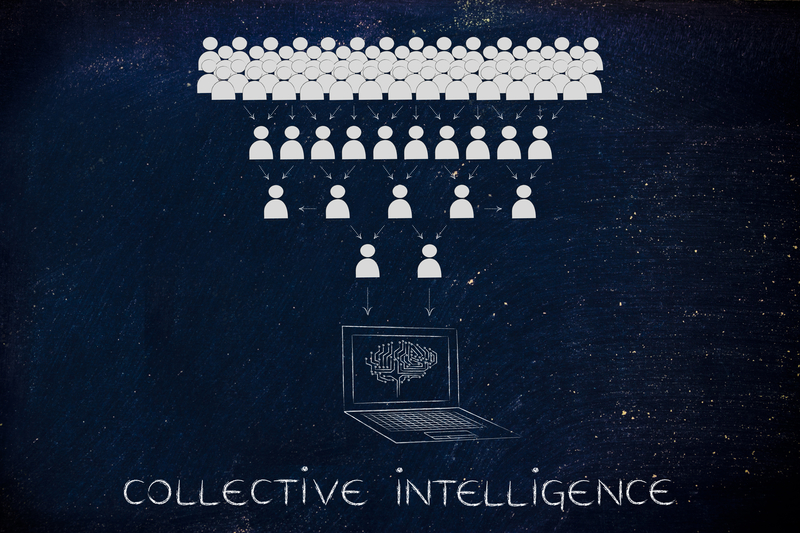
The longer I lead, the more convinced I become that leadership is not about having all the answers. It is about creating the conditions where better answers can emerge.
Being surrounded by people who bring deeper expertise is not a threat. It is a strength. It signals confidence, encourages learning, and enables innovation.
At Agronomix, this belief shapes how we lead, how we build teams, and how we support our clients. When curiosity, humility, and customer focus come together, better decisions follow.
Access to brilliant people is not a risk. Ultimately, it is one of the strongest advantages a leader or organisation can have.
Lo que sigue a leer

How Leaders Create a Culture of Intrapreneurship
Published marzo 10, 2026

Tutorials: Main Interface Ribbon
Published marzo 9, 2026

The Rise of the Intrapreneur – Innovating from Within Established Organisations
Published marzo 3, 2026

How Companies Thrive: The Essentials for Breaking Through Growth Barriers
Published febrero 26, 2026